

Mark Twain
23 Tedworth Square
London, England
By Susan K. Harris
When Mark Twain reached England at the end of his 1895–96 lecture tour around the British Empire, he first sojourned in Guildford, 25 miles southwest of London, where he began work on what would become Following the Equator (British title, More Tramps Abroad), his record of that trip. However, shortly after he and his travel companions — his wife Olivia, and their middle daughter Clara — moved in, his oldest daughter, Susy, died in the family home in Hartford, CT, and, according to Twain legend, the family fell into a period of deep mourning from which Olivia, at least, never fully recovered. In October, after their youngest, Jean, joined them, they moved to 23 Tedworth Square, London, a five-story townhouse where they would dwell for the next nine months. There, the story goes, the family lived in almost complete seclusion: Olivia grieving, the two girls faithfully attending her, and Twain alternately railing against God and knuckling down to writing. As he bitterly told his old friend Joseph Twichell, “I am working, but it is for the sake of the work — the ‘surcease of sorrow’ that is found there. I work all the days, and trouble vanishes away when I use that magic.”
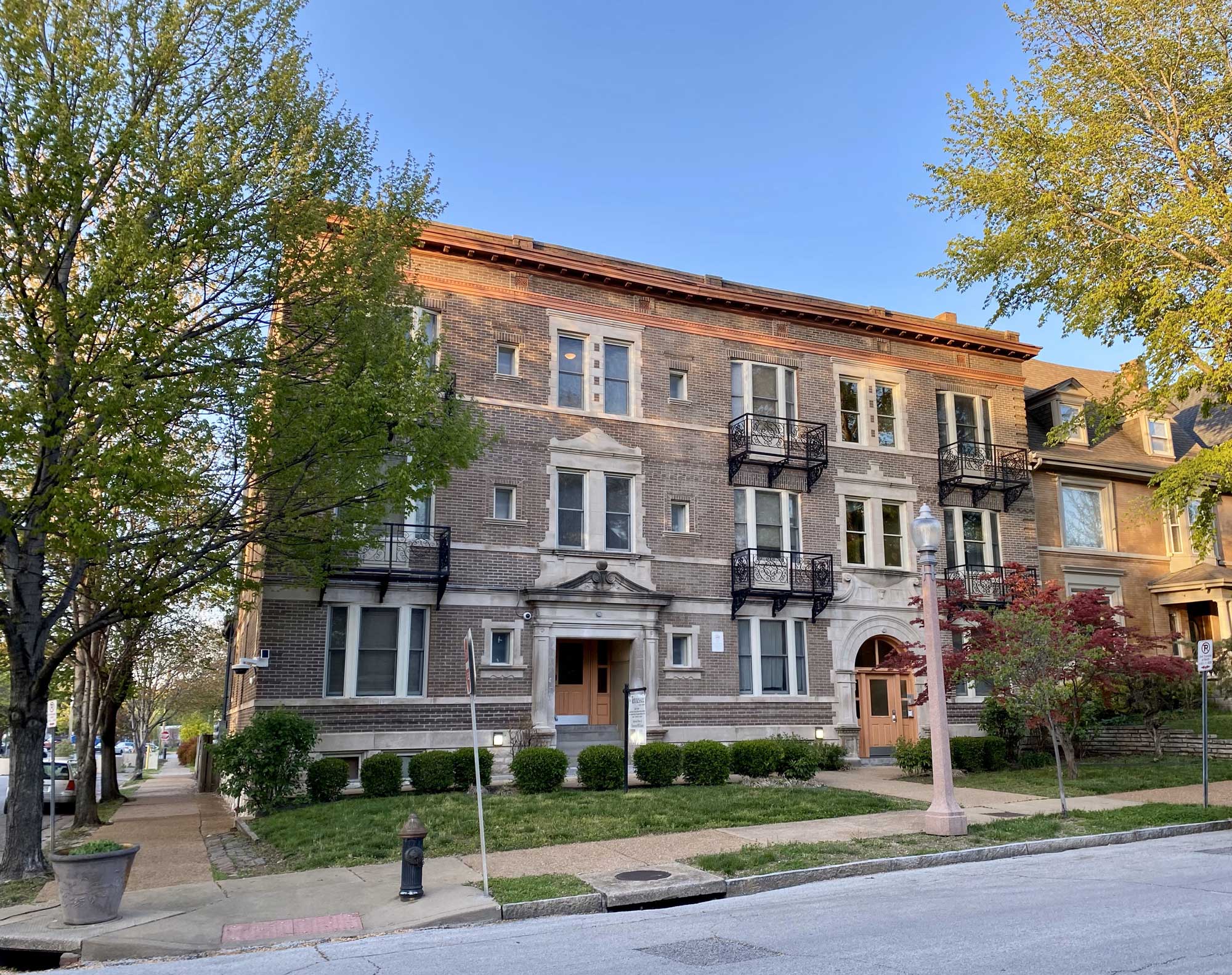
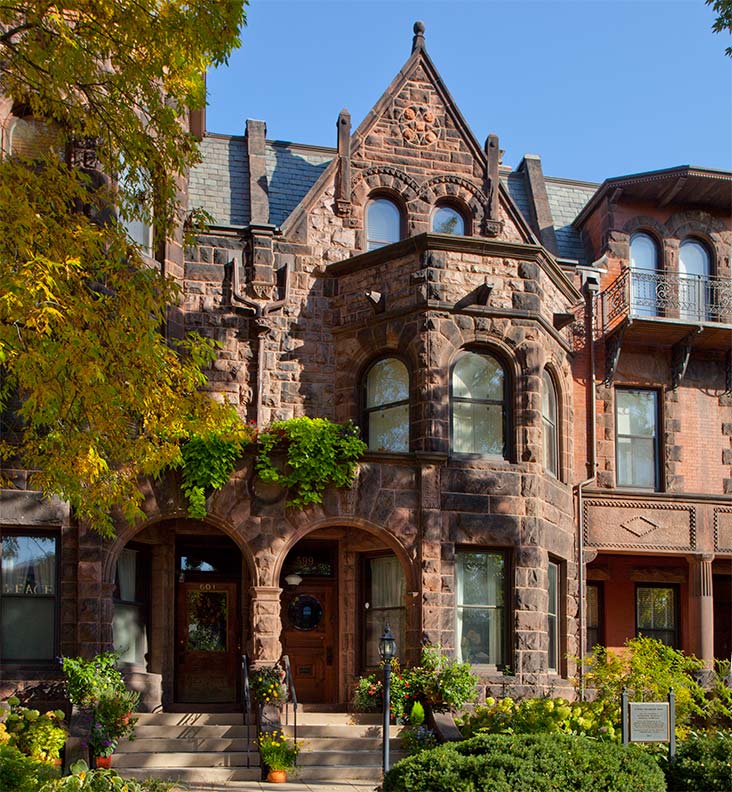
Tedworth Square is in Chelsea, a leafy section of London. In Twain’s day it was a modest neighborhood; today it shows all the signs of upscale gentrification, with apartment sales starting at over a million pounds. I made London my final stop when I followed Twain’s route around the world in 2013-14. Like Twain, I was relieved to have my journey finished. Although I had visited Australasia, India, and South Africa in separate trips, interspersed with teaching and other domestic duties, the collective undertaking had proven far more exhausting than I had anticipated — in part because I was always conscious of being an outsider, especially in cities where the sight of a lone woman triggered outspoken commentary from male spectators. In contrast London seemed welcoming and strangely safe. It was, I realized, a transitional space for me: familiar — I had visited often and lived there one summer — though still distant from domestic stress; a place to tie up loose research ends at the British Library, stroll through parks, and collect myself before I hit home and the myriad responsibilities awaiting me.
I suspect Twain and Livy felt the same way, despite — or perhaps because of — their bereavement. At least the family had been spared the shock of hearing about Susy’s death while surrounded by strangers and unknown tongues, and London was old stomping grounds for them, too. Chelsea also afforded some distractions, even for a grief-stricken writer living in (relative) seclusion. Tedworth Square enters obliquely into Following the Equator, in the India portion of the book. There Twain compares the flawless beauty of black and brown skins to “the white ones which are streaming past this London window now.” Not only are his neighbors’ skin colors “fish-belly,” “sallow,” and “mustard yellow,” one passer-by sports a “boiled-cauliflower nose in a flabby face veined with purple crinklings.” Not a generous assessment, but an early marker of the angry misanthropy that Twain developed in the wake of Susy’s death, I suspect.
Today’s London complexions are generally better — for all our urban pollutants, at least we don’t struggle with coal dust — but my journal reminds me that while I was sitting across from #23 a man stumbled by who did look like the people Twain described. Disheveled and unshaven, he was drinking beer at 11 am and smelled like a horse. Even upscale Chelsea isn’t entirely shut off from London’s outcasts.
Nor was the Clemens family entirely shut off from London’s social life. The story that the mourning family isolated themselves is, like many Twain stories, largely a myth, probably originating in Twain’s attempts to fend off interviewers by claiming sequestration. In fact all four had contacts with the world beyond the house. Although Livy rarely went out, she did see close friends at home, and Barbara Snedecor’s edition of Livy’s letters shows that she quickly resumed responsibility for family correspondence, including paying bills and (because Twain had shifted ownership of his copyrights to her prior to declaring bankruptcy) dealing with Twain’s contract negotiations. Clara and Jean certainly supported their mother, but not 24/7; David Frears’ Mark Twain, Day by Day, notes that they acquired bicycles and learned to ride them in the Square, and Clara’s memoir My Father, Mark Twain recounts long Sunday walks around the city with their father. With friends, both girls also attended concerts and theater performances.
Twain always gregarious, visited friends, including Poultney Bigelow, John Hay, Bram Stoker, and Rudyard Kipling, and he willingly attended the theater and social/public events, including a Zangwill reading, at least one meeting of the Savage Club, a Parliamentary session, and the Queen’s Jubilee. Letters also show him keenly following the McKinley/Bryan presidential race in the U.S. Moreover, though resisting most demands for lectures and interviews, he allowed his friend Adele Chapin to persuade him to “tell stories” to patients at the London Hospital, an event that delighted the patients and forced Twain out of his self-absorption.
We associate sprawling cities with loneliness and alienation. But their small neighborhoods and parks can also provide shelter, quiet places to harbor while learning how to shift from one stage of life to another. London proved transitional for the Clemens family, furnishing them the physical and social spaces they needed to navigate their lives without Susy. For them as for me, the city served as interstitial space, between the upheavals of travel and the resumption of familiar routines. They could mourn together inside the five-story house, but they could also venture beyond it: a bike ride around the square, tea with a friend, an afternoon concert, dinner at a social club. Day by day, month by month, 23 Tedworth Square harbored Livy, Clara, Jean, and Samuel Clemens while they worked through their initial shock and relearned the social skills they would need for the remainder of their lives.
Susan K. Harris’s studies of Twain’s life and works incorporate many perspectives, from his yearning to escape human time and space, through his courtship days, to his later anti-imperialism. Her most recent book, Mark Twain, the World, and Me: Following the Equator, Then and Now (2020), follows Twain on his journeys through Australia, India, and South Africa, exploring the cultural phenomena that he noticed (and those he ignored) and discussing her own relationship to one of America’s most powerful writers.
Photo by Becky Dale.

![Mark Twain in Study Window [1903]](http://newterritorymag.com/wp-content/uploads/2025/12/Twain-in-study-window-1903.jpg "Twain in study window 1903")