
Selected Reading
An archive of all that’s available online from The New Territory. Shop our back issues for more.
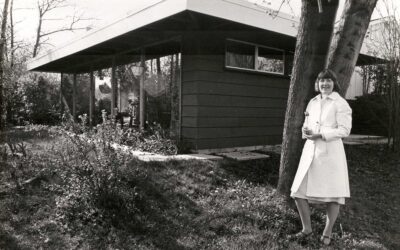
Lisel Mueller – Forest Haven, Illinois
Lisel Mueller 27240 N. Longwood Dr. Forest Haven, Illinois By Jenny Mueller “Our trees are aspens, but people / mistake them for birches” — so begins Lisel Mueller’s “Another Version,” set in 1970s Midwestern suburbia. This proves to be a territory of error. After...
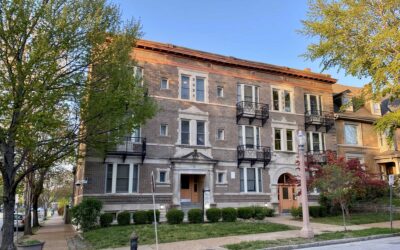
Tennessee Williams – St. Louis, Missouri
Tennessee Williams 4633 Westminster Place St. Louis, Missouri By Devin Thomas O’Shea Tennessee Williams called St. Louis “cold, smug, complacent, intolerant, stupid and provincial,” in a 1947 interview with the St. Louis Post-Dispatch, playing the heel to his...
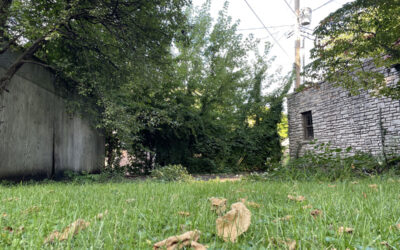
Kathleen Finneran – St. Louis, Missouri
Kathleen Finneran & North County, St. Louis—a kaleidoscopic view of how backyards hold the memories of lives lived through raging grief and easy joy.
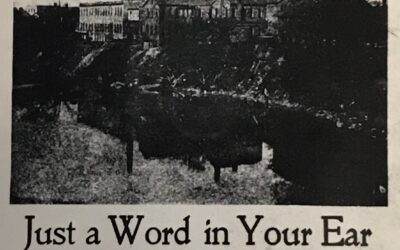
Sherwood Anderson – Elyria, Ohio
Sherwood Anderson & The Old Topliff and Ely Plant—on literary myths, Roof-Fix, and an escape along the railroad tracks in Elyria, OH.
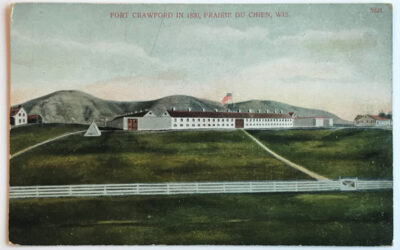
Rachel – Prairie du Chien, Wisconsin
In 1834, 20-year-old Rachel petitioned the St. Louis Circuit Court for her freedom, after she had been held in slavery in Ft. Snelling and Ft. Crawford, WI.
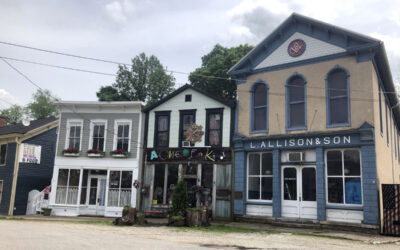
John Augustus Stone – Metamora, Indiana
John Augustus Stone & Metamora, IN—the story of a tourist town named after a play, and the details that most visitors today just don’t know.
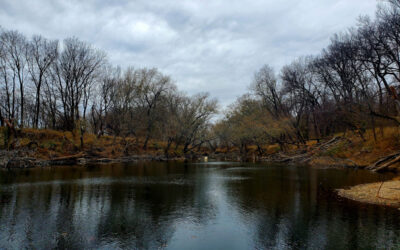
Gordon Parks – Fort Scott, Kansas
Gordon Parks & the Marmaton River—walking the cracked bottom of the gulch, following the “documentarian of a watershed century.”
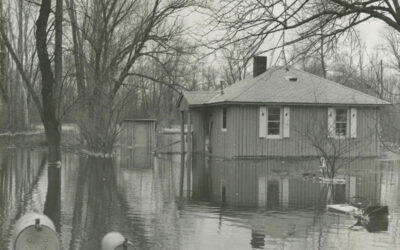
Lorine Niedecker – Blackhawk Island, Wisconsin
Lorine Niedecker’s River Cabin—America’s greatest unknown poet, writing in a riverside cabin that appears to shrug off the idea of annual flooding.

Hugo Martinez-Serros – Chicago, Illinois
Hugo Martinez-Serros & South Chicago City Dump—Depression-era salvage in a “a great raw sore on the landscape.”
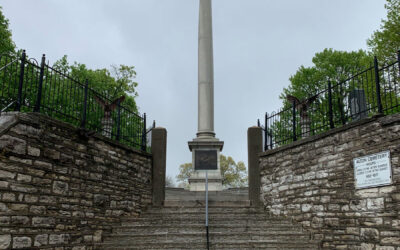
Elijah Lovejoy – Alton, IL
The publisher of an abolitionist newspaper, killed by a mob in 1837 after calling for “hearty and zealous efforts” to end slavery.
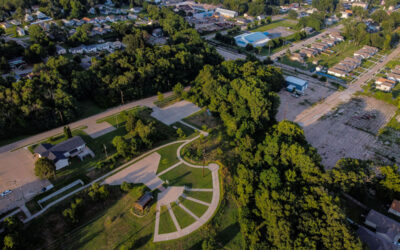
Malcolm X – Omaha, Nebraska
3448 Pinkney Street—the site of Malcolm X’s first home offers a more complex portrait of Midwestern mythologies.
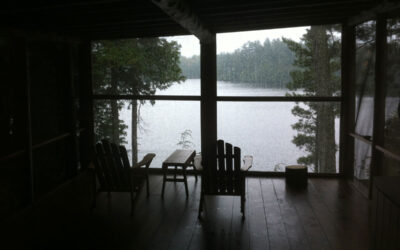
John Bartlow Martin – Herman, Michigan
Smith Lake Camp—a sanctuary in the Upper Peninsula, a place that “is not geared to make your visit painless.”
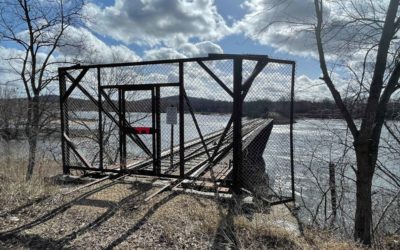
August Derleth – Sauk City, Wisconsin
August Derleth & Sauk City Rail Bridge—a local author’s erasure from the place that used to commemorate him with a bridge, a historical marker, a park, and a pie case.
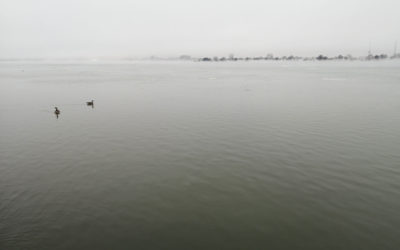
Philip Levine – Waawiiyaatanong
Philip Levine & Belle Isle—“here, alone, I am smudged by the warming mist of snow as the spring sun finds its way in.”
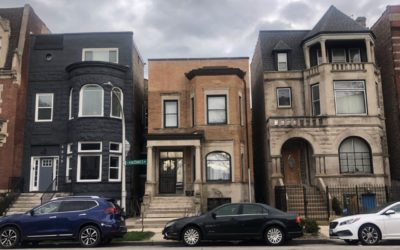
Richard Wright – Chicago, Illinois
Richard Wright house—a modest brownstone among “great sweeping corridors of concrete and ingrained prejudice.”
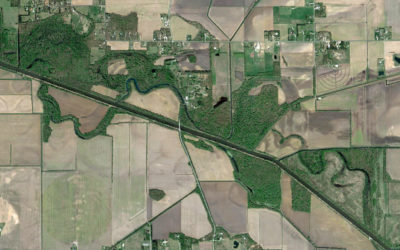
Lew Wallace – Porter County, Indiana
Lew Wallace Grand Kankakee MarshPorter County, Indiana By Matthew A. Werner Indiana once had one of the greatest natural habitats in North America: the Grand Kankakee Marsh. Author Lew Wallace loved it so much, he kept a houseboat on its thruway, the Kankakee River....
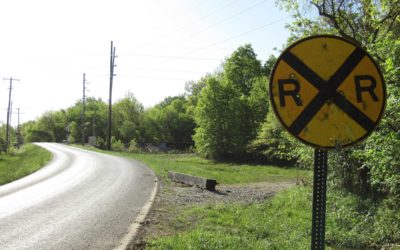
James Tate – Pittsburg, Kansas
James Tate Cow Creek CrossingPittsburg, Kansas By Leslie VonHolten Each James Tate poem presents itself like a welcoming trailhead — happy, sunshiney even. It is not until you are deep in the woods of it all before you sense the lurking weirdness. For example, in “The...
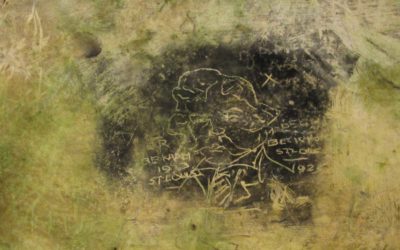
Mark Twain – Hannibal, Missouri
Mark Twain Cave—underneath Hannibal, MO, where in the middle of a tour, the lights went out, and “this shared, quiet darkness felt elemental and deeply human.”
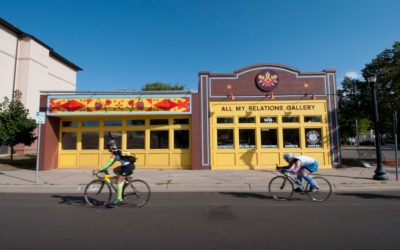
Heid E. Erdrich – Minneapolis, Minnesota
Heid Erdrich & All My Relations art gallery—“imaginative language-meaning” in the American Indian Cultural Corridor.
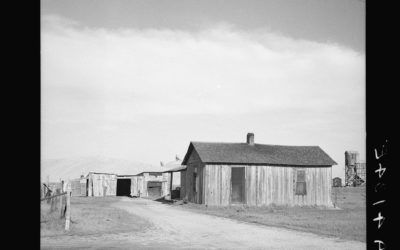
Meridel Le Sueur – Picher, Oklahoma
Meridel Le Sueur & a miner’s shack—how investigating environmental damage reveals “the hopeful and radical potential of regionalism and place.”

Jean Shepherd – Hammond, Indiana
Jean Shepherd’s childhood home—written as both a “mythical place” and an avatar of Hammond, IN, “just a few miles upwind” of steel mills, oil refineries, and polluted rivers.
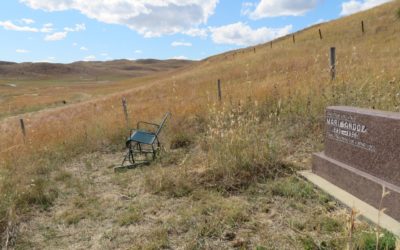
Mari Sandoz – Sheridan County, Nebraska
“Even with a breeze, the place was so profoundly silent that all of my own thoughts were too loud.” — C.J. Janovy
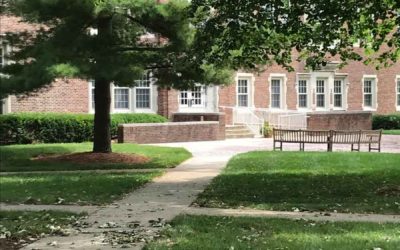
Mary Hunter Austin – Carlinville, Illinois
Mary Hunter Austin & Blackburn College—a kinship in the desire to walk about unhampered and forge meaningful connections. #LiteraryLandscapes by Karen Dillon & Naomi Crummey.
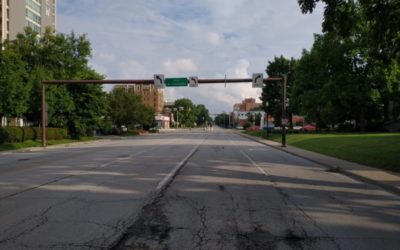
Booth Tarkington – Indianapolis, Indiana
Booth Tarkington & North Meridian St.—striving for beauty and dignity amid the turmoil of this past year. #LiteraryLandscapes
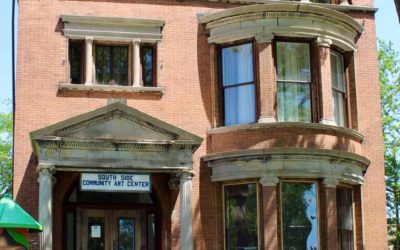
Gwendolyn Brooks – Chicago, Illinois
Gwendolyn Brooks & South Side Community Art Center—looking back toward Bronzeville: Brooks’s voice above the hum. #LiteraryLandscapes
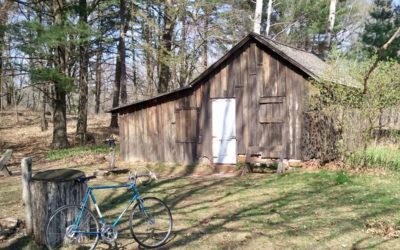
Aldo Leopold – Baraboo, Wisconsin
Aldo Leopold’s Writing Shack—the “land ethic” of a converted chicken coop, feeding the soul in Sand County. #LiteraryLandscapes by Marc Seals.
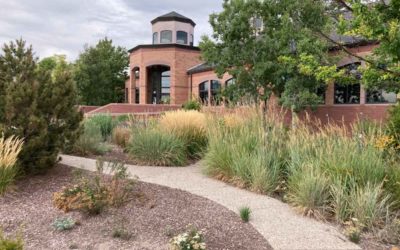
James Emanuel – Alliance, Nebraska
Two generations finding “my truth and my refuge” at the Alliance Public Library. #LiteraryLandscapes by Sean Stewart.
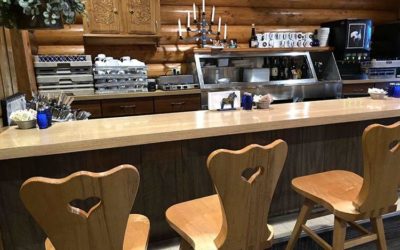
Norbert Blei – Sister Bay, Wisconsin
Norbert Blei & Al Johnson’s—fikasugen, “Counter Culture,” and the longing for public spaces.
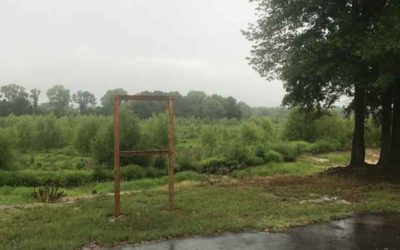
Maya Angelou – Stamps, Arkansas
Maya Angelou & the memorial at Lake June—“picturing the red clay that Maya Angelou once walked across, imagining the breeze she once breathed.”
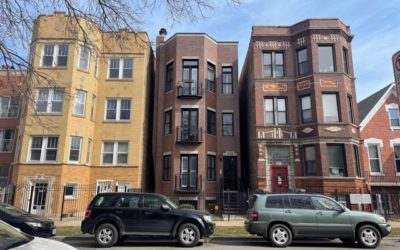
Sandra Cisneros – Chicago, Illinois
Humboldt Park—where the condo that replaced the house on Mango Street “has an attenuated look, seeming to both belong and not belong.”
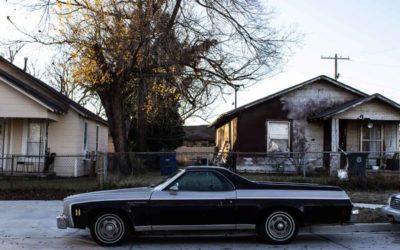
S.E. Hinton – Tulsa, Oklahoma
S.E. Hinton & Crutchfield—Tulsa’s part in “a story about boundary lines, divisions that we create and perpetuate.”
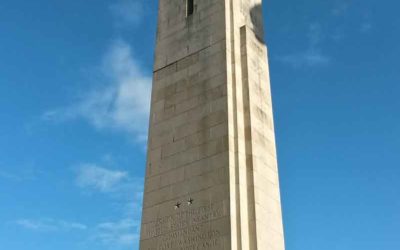
Sarah Morgan Bryan Piatt – North Bend, Ohio
Though Piatt’s writing seems “sweet and peaceful,” it “proves to be like ‘the depths of a dark river,’ ‘shadowy and terrible.’”
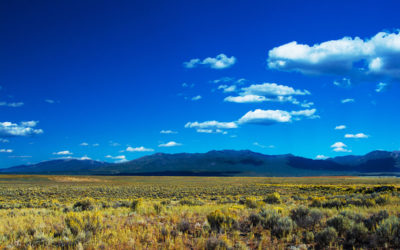
Willa Cather – Taos, New Mexico
Willa Cather & the mesa outside Taos, New Mexico—where “the desert is everything and nothing. God without men.”