
Danez Smith
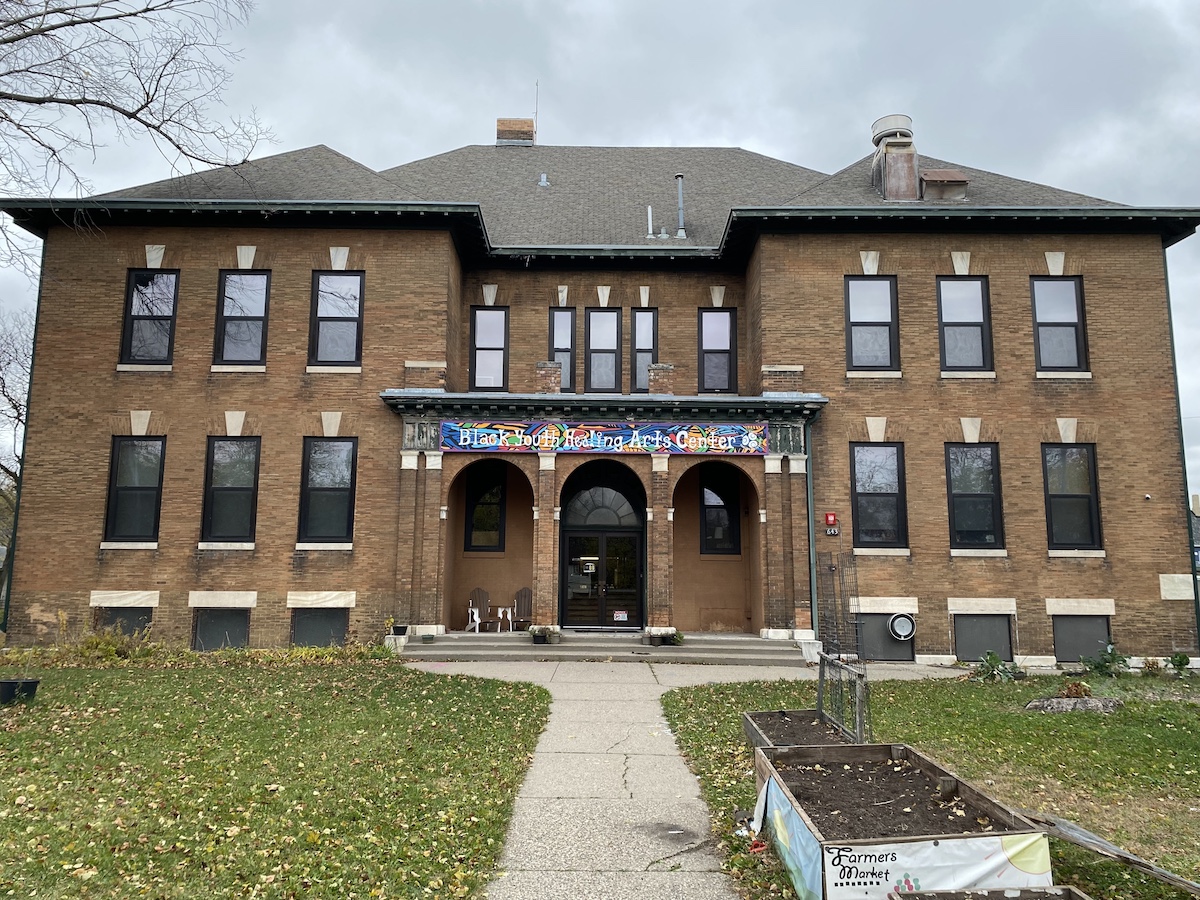
Black Youth Healing Arts Center
St. Paul, Minnesota
By Chandler Peters-DuRose
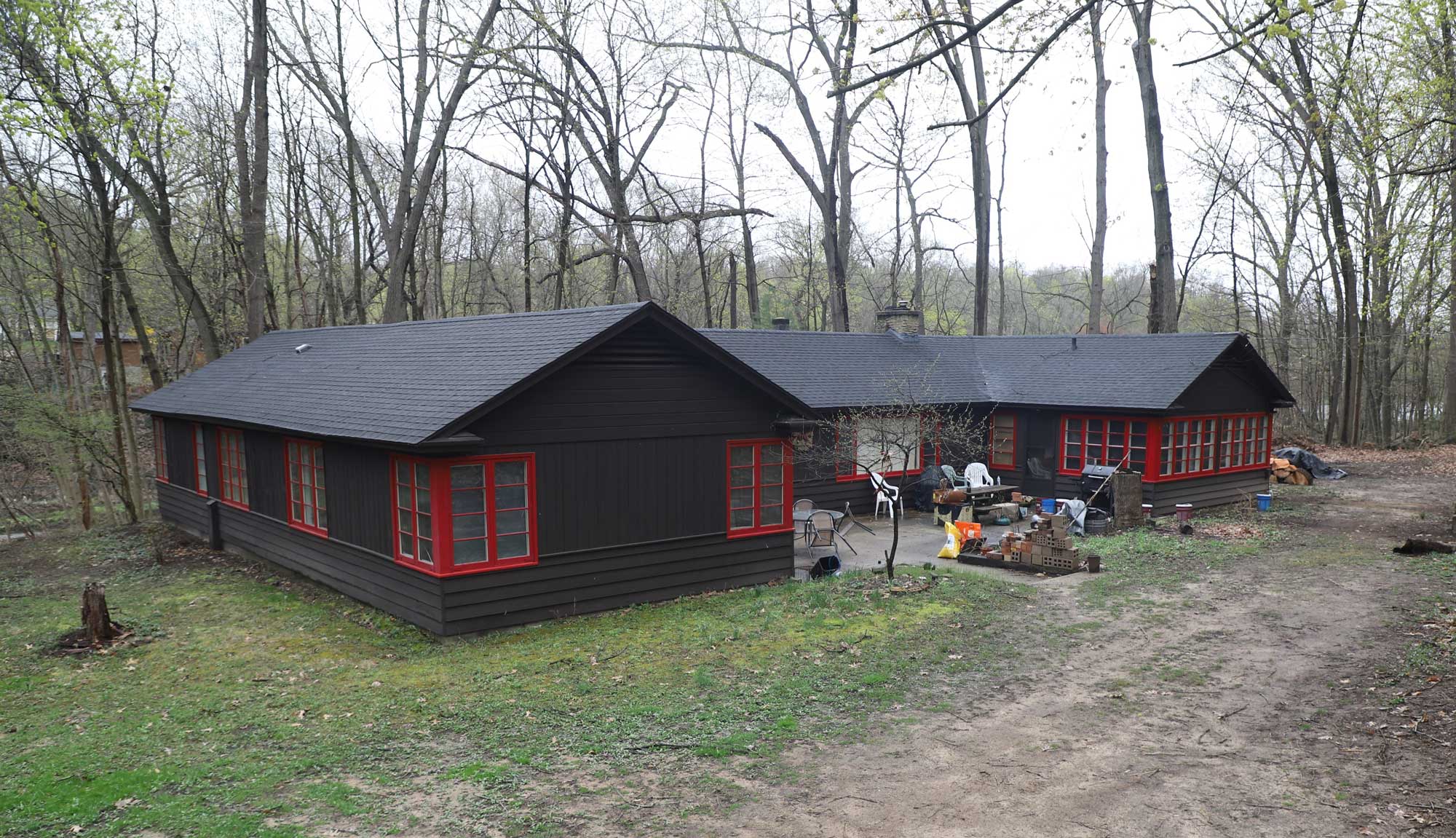
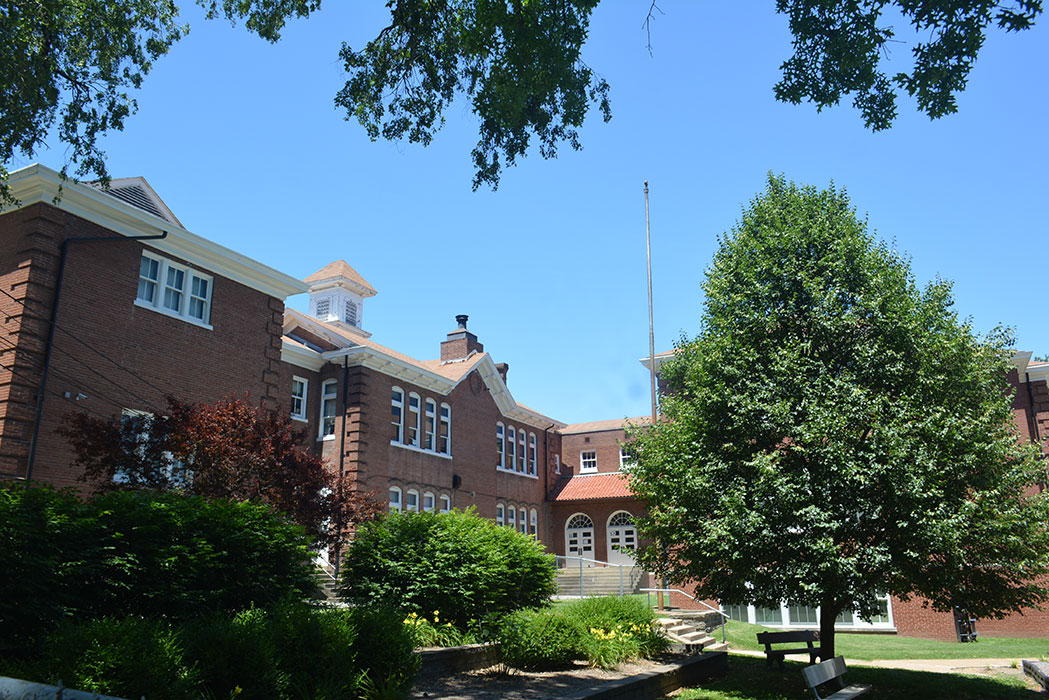
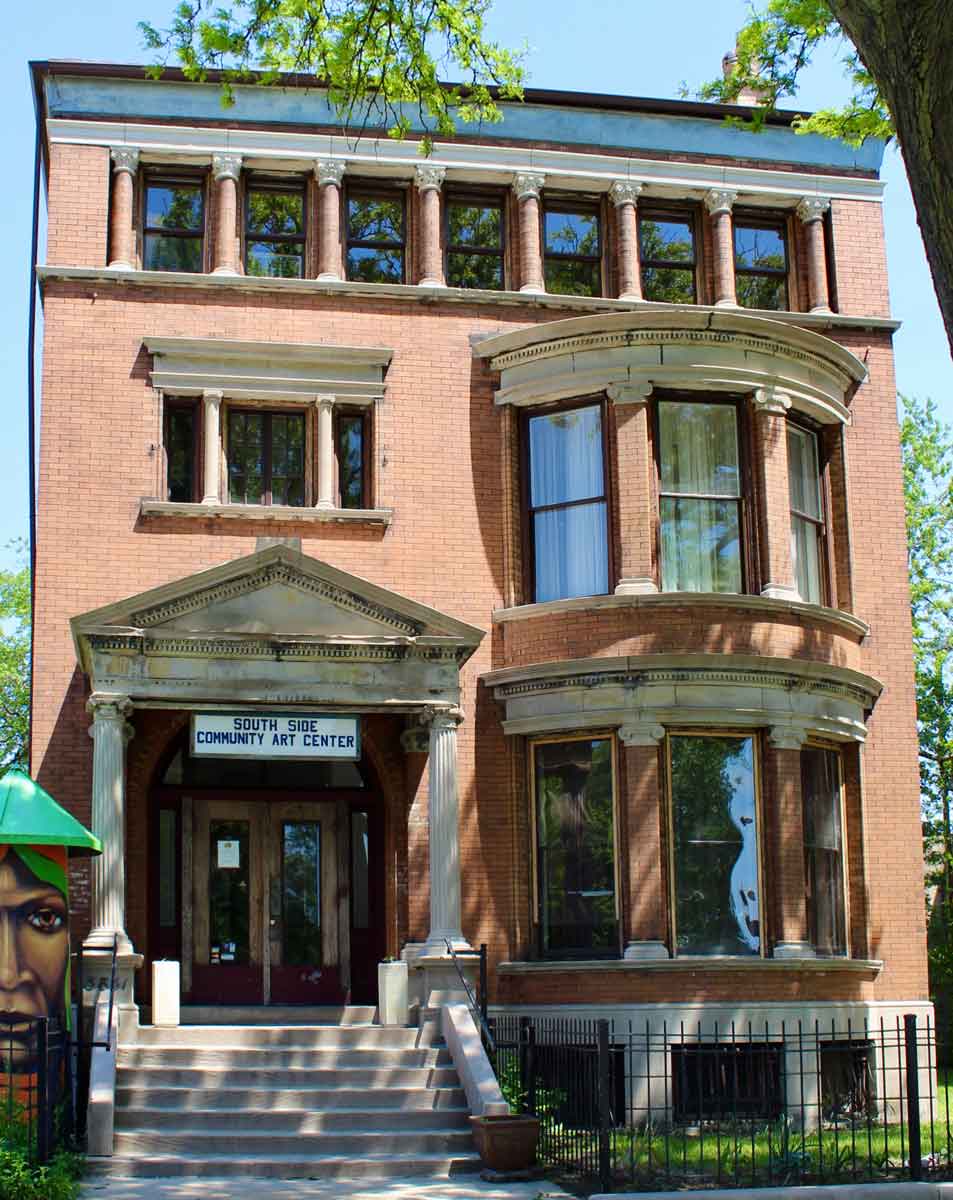
It was March 2023, a week after my 19th birthday. We were in the McClinton room of the Black Youth Healing Arts Center (BYHAC), located in the Rondo neighborhood of St. Paul, Minnesota. Even though the building is now home to the BYHAC, it was previously Red School House, a Native American charter school founded in 1972.
That day, we were sitting at one of the grey classroom tables donated to us by the school. Despite it being a classroom table, it lacked the writing left by burnt-out students or the gum underneath that a student couldn’t be bothered to throw away.
Now we sat, the poet Danez Smith, about seven other students, and me, imagining the shape of what we now know as ‘Poetry Lab’. Danez started the conversation by asking what we wanted to work on. That led to someone asking, “what even is a poem in the first place?” We had no concrete definition. Danez said they didn’t even know, that a poem could be whatever we wanted it to be. I was confused — how could someone who has been writing poetry my entire life not know what constituted a poem?
We dreamed the question that ultimately became the heartbeat of the space: “How do we get people to cross the boundaries of their imagination?” Writers are so often told what should be written, and we did not want to restrict those young writers who engaged in the space. We wanted to address what was possible.
As we talked, we realized we couldn’t do that without remembering where we came from, which prompted the idea of studying the past, present, and future of Black poetic history. Every week we read work from the ancestors who came before us, our contemporaries who were writing into our current conditions, and still others who took it on themselves to write into the possibilities of tomorrow.
I don’t think any of us predicted just how much this would impact the BYHAC community. In the same way the BYHAC started as a twice-a-month program in the basement of a church and grew so much it needed its own building, Poetry Lab became a years-long weekly meeting of poets. Some of them had been writing for decades and some had only written one poem in their life. Then of course there was Danez, the poet who got me into poetry and was my mentor in the craft all the way from first poem to first publication.
For three years Danez showed up weekly with two poems and a writing prompt. The rest of us came with a notebook and the audacity to write vulnerable and healing poems and share them. The core group of poets came regularly despite it being a walk-in class. Trust grew. We would delve deep into the hurt, grief, and healing that make us humans and poets.
Through some of the hardest times in my life, poetry was there. The community was there when my roommate died unexpectedly and there when I was trying to form my own adult identity. When I had to drop out of college, they were supportive. At times when the last thing I wanted to do was write, I showed up. Weekly.
Danez worked to allow us a space to show up as we were, and we held that space sacred. What is more sacred than artists creating amidst the horrors of the world?
In their most recent book Bluff, Danez writes in the poem “principles,”
Let us not be scared of the work
because its hard
let us move the mountain
because the mountain must move.
After Trump was elected for a second term, the urgency of the poems grew. While watching multiple genocides take place and fascism in this country becoming more and more overt, our poems needed to match that urgency. What was a political pulsing vein turned to a steady heartbeat. I had started by writing extremely personal, heartbreaking, and at times retraumatizing poems but during this time shifted into a political conversation.
As my poems developed, so did my confidence. In the beginning, Poetry Lab felt hard. I could barely read without anxiety and was constantly comparing my work to the poets around me. Then in August 2024, Danez was curating for the Academy of American Poets’ Poem-a-Day. They asked me and a handful of other poets to publish our work. I was honored to say the least, and on August 9, 2024, my poem “Rest Stop” was published. While I believe I would have been published at some point, without BYHAC I don’t think I would have had the opportunity so soon to share my work this widely.
The year prior, Danez had helped me put together my first zine, titled Transplant after a poem I had written and edited in that space. A few months after the book came out, Danez and I were in the car, and they asked if I could read the poem. I thought they meant as an artist share. But no, they wanted to teach it. In that moment, I was no longer in their car. I was 16 finding poetry for the first time, 18 meeting Danez at a coffee shop for the first time. Back in the car, at 20, I said yes.
Later, at the center, I was reading, expecting feedback. I got nothing but praise for my work and the book. A week later, a poet from the space came back to me and said they wrote a poem after “Transplant.” I had felt like I had succeeded as a writer, in every way.
Now, I’m 21 and have three publications. I’m working with Cave Canem and writing my second play. I attribute a lot of my success to not only Danez’s mentorship but also the work I and other poets have put into making the BYHAC a space for poets — especially poets of color — to thrive. Danez and I talked extensively about how spaces for poets don’t exist like they used to, especially after lockdown, when everything moved online. While we have a robust poetry scene in the Twin Cities, opportunities for community are few and far between. The places that do exist are often inaccessible financially.
Poetry weaves metaphor with meaning to create art. I have learned to make poetry a place where my politics and ethics can grow. I’ve learned the ways in which words and images work together to create something nothing less than magic. I’ve seen poems manifest into my daily life. I have built community around writing. I have felt my words resonate with people in ways I never would have imagined. Sometimes, all it takes is a moment in a coffee shop with a good mentor to show what is possible. That possibility can lead to enough audacity to ask, no really, what if…
Chandler Peters-DuRose (they/them) is a Black Queer adoptee poet and the author of Transplant (2024). Their work appears in Poem-a-Day, from the Academy of American Poets. They reside in the Twin Cities.
Photo courtesy of Irreducible Grace Foundation and the Black Youth Healing Arts Center

![Mark Twain in Study Window [1903]](https://newterritorymag.com/wp-content/uploads/2025/12/Twain-in-study-window-1903.jpg "Twain in study window 1903")