
Stuart Dybek
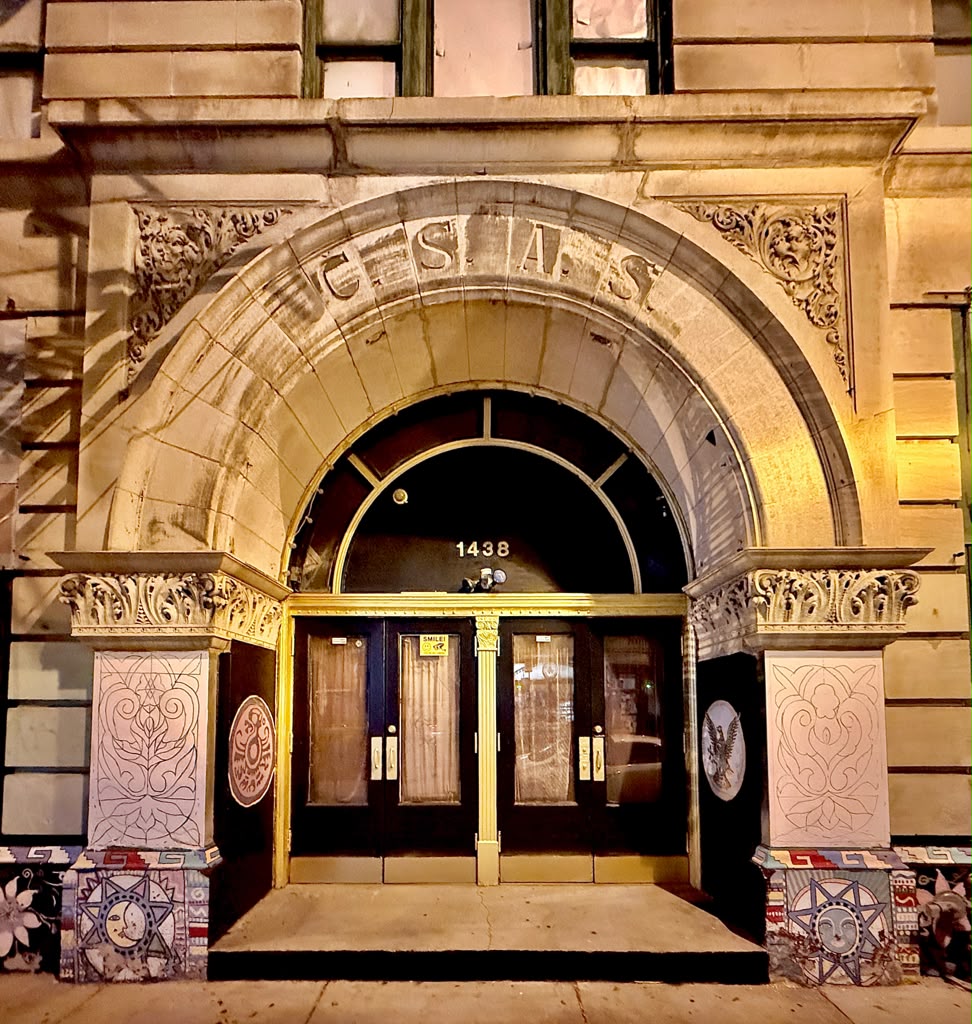
1438 W. 18th St.
Chicago, Illinois
By Izabella Kimak
I have been coming to Chicago for a quarter of a century now, ever since my mother and sisters left Poland for the United States in the early 2000s. Initially, Chicago for me meant the downtown, really. Since I was raised in a small town in Eastern Europe and was then living in a mid-size city with only modest-height buildings, I could not help but marvel at the architectural wonders of Chicago’s city center. As a result, the neighborhoods outside of the Loop were, at most, an afterthought.
It took me years and many a visit to Chicago — a time during which I graduated from college in Poland and begun my career as a professor of American literature — to realize that I could view Chicago through a different lens, that is as literary and scholarly material. In 2021, I found myself in the Windy City for the first time not merely as a relative visiting from Poland, but as a scholar, a recipient of the Kosciuszko Foundation fellowship at Northwestern University in Evanston.
The person who had arranged my invitation letter was none other than Stuart Dybek, an esteemed bard of Chicago and a descendant of immigrants from Poland. I had written to him earlier, explaining my intention to do a research project on Polish American literature, harboring only scant hopes of ever getting a response, much less the friendship that we would eventually develop.
When I started exploring Chicago’s neighborhoods that fall, somehow I still did not make it to Pilsen. But the neighborhood that Stuart Dybek grew up in and writes extensively about was patiently waiting for me. I eventually made it there in the summer of 2023, when I was in Chicago for a month to do research for my book project on Polish Chicagoan writers.
As a street art enthusiast, I simply could not not enjoy Pilsen. The neighborhood is a mecca for street artists, with murals and mosaics decorating every inch of spare space. Despite ongoing gentrification, Pilsen still retains the working-class and artsy vibe that Dybek captures in much of his writing. During the writer’s childhood, Pilsen was an ethnically mixed neighborhood, a reality reflected in many of his texts: Dybek’s male characters are often either Slavs or Mexicans, with friendships that easily cross ethnic lines.
Today, the Slavs are mostly gone, but there is a continued Latine presence in the neighborhood. The transformation of the area is best exemplified by the building at 1438 W. 18th St, where Dybek set his story “Chopin in Winter” and near which the writer’s family used to live, according to the Chicago Literary Hall of Fame website.
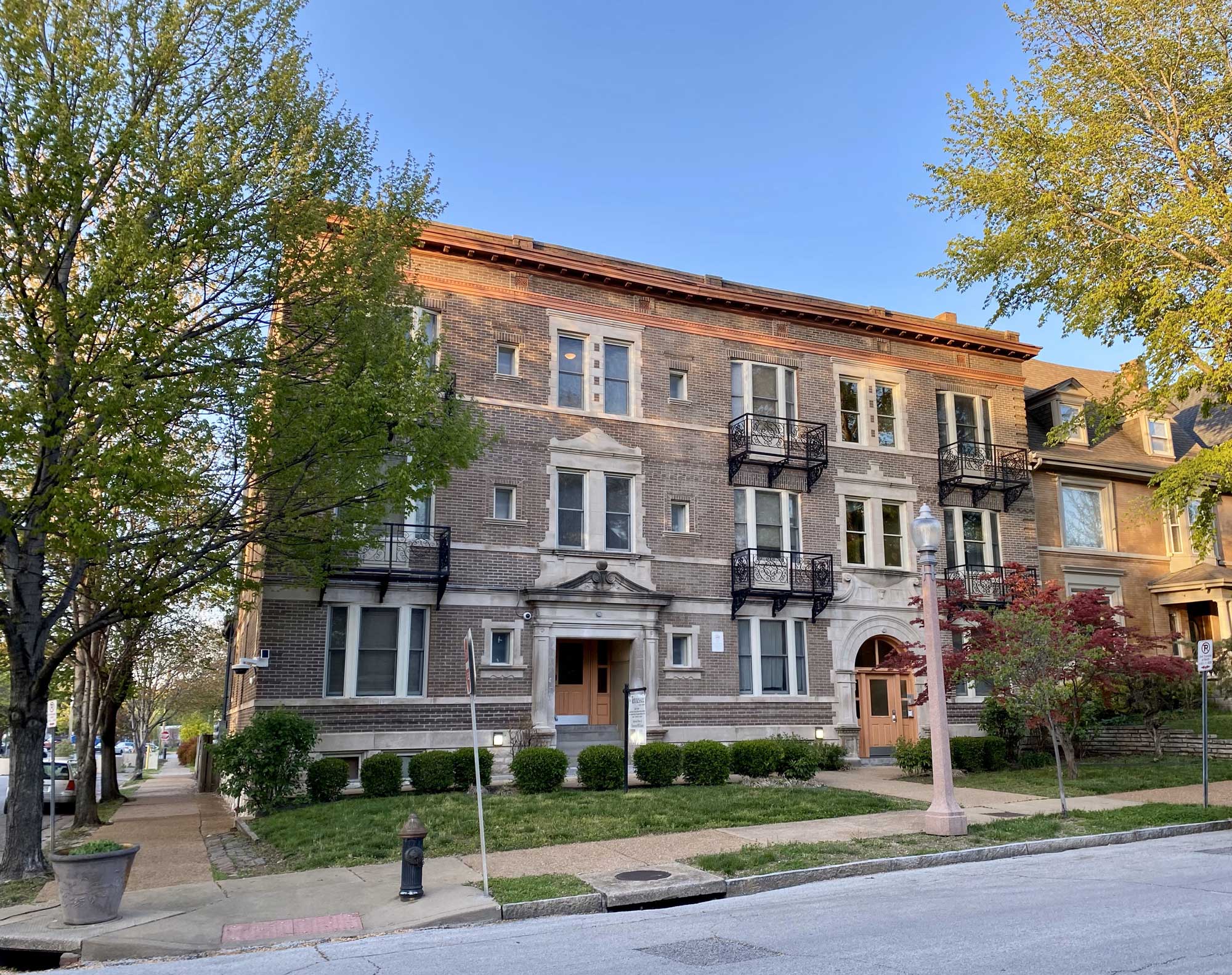
The massive structure — which actually occupies three lots at 1436, 1438, and 1440 W. 18th St. — seems to be watching over the neighborhood in flux. Standing four stories tall and topped with a mansard roof, it impressively rises above the modest two- and three-story buildings that surround it. The materials used in its construction are quite typical for the region: the sides sport Chicago common brick, while the representative limestone façade with its ornamental arch harks back to the times when the building used to house the Czesky Salonsky Americky Hall Sokol, a community center for the immigrant Bohemian community, combining a dance hall and gym for the Sokol club members.
“Chopin in Winter,” included in Dybek’s collection The Coast of Chicago (1990), is narrated by a young boy, Michael, and is set exclusively inside the building at 1438 W. 18th Street, in the fourth-floor apartment that the boy’s family is renting from their Bohemian landlady, Mrs. Kubiac. Struggling with his penmanship skills and trying to make sense of his relationship with his maternal grandfather, called in the text with the Polish diminutive Dzia-dzia, the young narrator frequently looks out the window at the snow-covered street: “Mrs. Kubiac’s building towered a story higher than any other on the block. From our fourth-story window I could look out at an even level with the roofs and see the snow gathering on them before it reached the street.” The edifice is not an incidental backdrop to the events narrated but seems a character in its own right, resonating with the emotions of its inhabitants and carrying the music played by the landlady’s pianist daughter.
If — as Colson Whitehead imagines in The Colossus of New York (2003), a love letter to another major US city — the urban fabric could talk, 1438 W. 18th Street would have a spectacular story to tell. It would be a tale of the constant mutation of the built environment, of population groups leaving and others coming in their stead, of a city as a palimpsest of various orders that, like the graffiti of Pilsen, fade away — but never quite completely — to give way to new modes of expressions and new ways of imagining the city.
Today, Pilsen is a vibrant neighborhood, attracting art-oriented residents and visitors. In the immediate vicinity of the building, you can order huevos divorciados for lunch at the Frida Room, go gift-shopping at the Mestiza store next door, or grab a coffee at the immensely popular Café Jumping Bean right across the street from Dybek’s building.
The colossus of Pilsen seems quiet in comparison. Granted, the first floor advertises itself as an art gallery, but somehow it is never open when I’m there. The building seems almost vacant, even if the half-complete Mexican-inspired tilework on the façade indicates some efforts to make the building engage in the rich cultural life of its neighborhood. For the time being, however, it seems a silent witness to the ever-morphing city and a tangible symbol of nostalgia and loss, sentiments that permeate every nook and corner of Dybek’s affective maps of his beloved neighborhood.
Izabella Kimak is an Assistant Professor of American literature at Maria Curie-Sklodowska University in Lublin, Poland. Her research focuses on contemporary US-American literature, with particular emphasis on migration, ethnicity, gender, and sexuality. A Kosciuszko Foundation fellow and a recipient of the Polish National Science Center research grant for the project “Sweet Home Chicago? The Windy City and American Writers of Polish Descent,” in 2026 she was a Fulbright Visiting Scholar at Loyola University Chicago, working on the project “Mapping the Polish Midwest: Polish American Literature and Place-Making.”
Photo by Mark Dobrzycki, who graduated from Northwestern University and was a photo editor at the Daily Northwestern and the Associated Press. His photos have been published in many publications, including Time, Vanity Fair, and the front pages of The San Francisco Examiner and Stockholm’s Expressen.

![Mark Twain in Study Window [1903]](https://newterritorymag.com/wp-content/uploads/2025/12/Twain-in-study-window-1903.jpg "Twain in study window 1903")